Introduction: A Nation of Young People
Walk through any Somali city, whether Garowe, Mogadishu, Hargeisa, Kismayo or Baidoa, and one truth is immediately visible: Somalia is a country of young people. More than 70 percent of the population is under the age of 30, which makes Somalia one of the youngest nations on earth. This should be the country’s greatest asset. Young people rebuild economies, drive innovation, and carry nations through difficult transitions. Yet for too many young Somalis, youth has become a long season of waiting: for education that prepares them for real work, for jobs that never come, and for a country that treats them as partners rather than problems.
This article looks at the most pressing challenges facing Somali youth today, from weak education and unemployment to exploitation by armed groups, criminal networks, smugglers, and political actors. It also highlights practical approaches that have shown real promise, both inside Somalia and in similar contexts. Our starting point is simple. Somalia’s youth are not a burden to be managed. Given a real chance, they are the country’s most powerful engine of recovery.
1. The Education and Skills Deficit
The foundation of every other youth challenge in Somalia is education. Decades of state collapse left the education system fragmented, largely privatized, and unevenly regulated. Many schools operate without harmonized curricula or qualified teachers. Large numbers of children, particularly girls, rural children and the displaced, remain out of school entirely. Even those who complete secondary school or university often graduate with qualifications that do not match what the labour market actually needs. Employers complain of shortages in technical, vocational and digital skills, while thousands of degree-holders sit at home without work.
The result is a painful paradox: a young population eager to learn and work, and an economy unable to absorb them. Research across Somali regions consistently identifies poor education quality and the mismatch between skills and market demand as root causes of youth unemployment, frustration, and risky decision-making.
2. Unemployment and Economic Exclusion
Youth unemployment in Somalia remains among the highest in the world. UNDP’s landmark Somalia Human Development Report (2012) put youth unemployment at 67 percent, one of the worst rates globally, and even higher for young women. More recent World Bank/ILO estimates (2024) place formal youth unemployment at around 34 percent. But that figure understates the crisis, because it leaves out the far larger number of young people trapped in informal, insecure or underpaid work, or those who have simply given up looking. Behind the numbers are daily realities familiar to every Somali family: graduates selling airtime on street corners, skilled young tradespeople who cannot find steady contracts, parents watching educated children slowly lose hope.
Unemployment is not only an economic problem. It is the doorway through which nearly every other youth risk enters, whether recruitment, crime, dangerous migration or manipulation. A young person with income, purpose and dignity is far harder to exploit.
3. Exploitation by Armed Groups, Criminal Networks, and Piracy
Where legitimate opportunity is scarce, illegitimate actors move in. Studies of former al-Shabaab members show that recruitment feeds on a familiar mix of unemployment, limited education, poverty, grievance, and the search for identity and belonging. Human Rights Watch has documented aggressive campaigns in which armed groups pressured communities to hand over children for indoctrination and military training. Criminal gangs in urban centres recruit idle young men in much the same way. And during the height of piracy off the Somali coast, World Bank research found that the men who actually manned the skiffs were overwhelmingly unemployed youth from coastal communities. They faced the deadly risks at sea, while most of the profits went to financiers onshore.
The lesson in all these cases is the same. Young Somalis are rarely the ones who plan violence and crime. More often, they end up as its foot soldiers, and as its first victims. Preventing exploitation means competing for young people’s futures with something better, not simply punishing them after the fact.
4. Tahriib: The Deadly Journey of Irregular Migration
Few words carry more pain in Somali households than tahriib, the irregular journey of young people toward Europe or the Gulf through Ethiopia, Sudan, Libya, or across the Gulf of Aden. Research commissioned by UNICEF and carried out by the Rift Valley Institute in Puntland and Somaliland documented how smuggling networks lure youth with deferred-payment schemes. Many of those who go end up facing ransom, abuse, and death in the desert or at sea. The Heritage Institute’s national study found something even more telling: young people attempt tahriib even from relatively peaceful areas, pushed by unemployment, poor-quality education, peer influence, and well-organized smuggling networks. In other words, insecurity alone does not explain the exodus; much of it is driven by hopelessness.
Every young person lost on the road to Libya or beneath the Mediterranean is a teacher, engineer, nurse, or entrepreneur Somalia will never have. The brain drain of legal emigration compounds the tragedy of irregular migration: the country is exporting the very generation it needs to rebuild.
How close this despair sits beneath the surface became clear at the Puntland Local Conference of Youth on Climate Change (LCOY), held in Garowe on 6 October 2025. More than 100 young people gathered to discuss drought, water scarcity, environmental degradation, climate adaptation, climate finance, and youth participation in environmental decision-making. The discussions were serious and well-informed. But when the conversation turned to their own futures, the tone changed. Several participants spoke candidly of feeling that they are not a priority for society or government when it comes to employment, and some went as far as suggesting that tahriib remained the most realistic option left to them. What struck listeners most was that these were capable, engaged young people; the problem was not ambition but the absence of guidance, mentorship and visible pathways connecting their energy to real opportunity at home. When even the youth who show up to shape national conversations quietly consider the smuggler’s route, the message to policymakers could not be clearer.
5. Clan Conflict and Political Manipulation
Perhaps the most quietly corrosive challenge is the way youth are used in clan conflicts and political competition. Young men are mobilized as fighters in inter-clan disputes they did not start and will not benefit from. During electoral seasons, youth are recruited to amplify divisive rhetoric, intimidate rivals, or swell demonstrations, and are then set aside once positions and resources are distributed. UNDP analysis notes that political elites exploit clan identities in ways that systematically disadvantage women and youth. The bitter irony is hard to miss. The generation with the least stake in clan grievances is asked to bleed for them, yet remains almost absent from the tables where those conflicts could actually be resolved.
Social media has added a troubling new dimension to this problem. With so much unstructured time on their hands, many young people have drifted into online spaces where clan and political rivalries are amplified rather than calmed. A recent incident illustrates the danger. Just last week, a young man filmed clashes between two communities and circulated the footage online, celebrating what he described as his clan’s victory over the other. Here was a young person with real energy, initiative and digital skill, the kind of qualities any employer or civic organization would value. Instead, those talents went into deepening a conflict that serves no young person’s interest. The problem goes well beyond one individual’s choices. It reflects idle time, absent mentorship, and a lack of the positive outlets and digital literacy that would let youth use these same platforms for peacebuilding, enterprise and civic voice.
6. The Hidden Toll: Hopelessness and Substance Abuse
Less visible, but no less damaging, is the psychological toll of prolonged exclusion. Somali communities have a word for it: quus, the quiet despair of young people who see no path forward. Years of idleness wear down confidence, ambition, and mental health. In this vacuum, khat consumption and other forms of substance abuse have taken root among unemployed young men, draining scarce family income and pulling them further away from work, study, and community life. Mental health support remains one of the most neglected services in the country, so families carry this burden largely alone. Any serious youth agenda has to take this despair into account and work deliberately to rebuild hope, through opportunity, counselling, sport, faith-based guidance and a genuine sense of belonging.
Signs of Momentum: Youth Are Being Heard
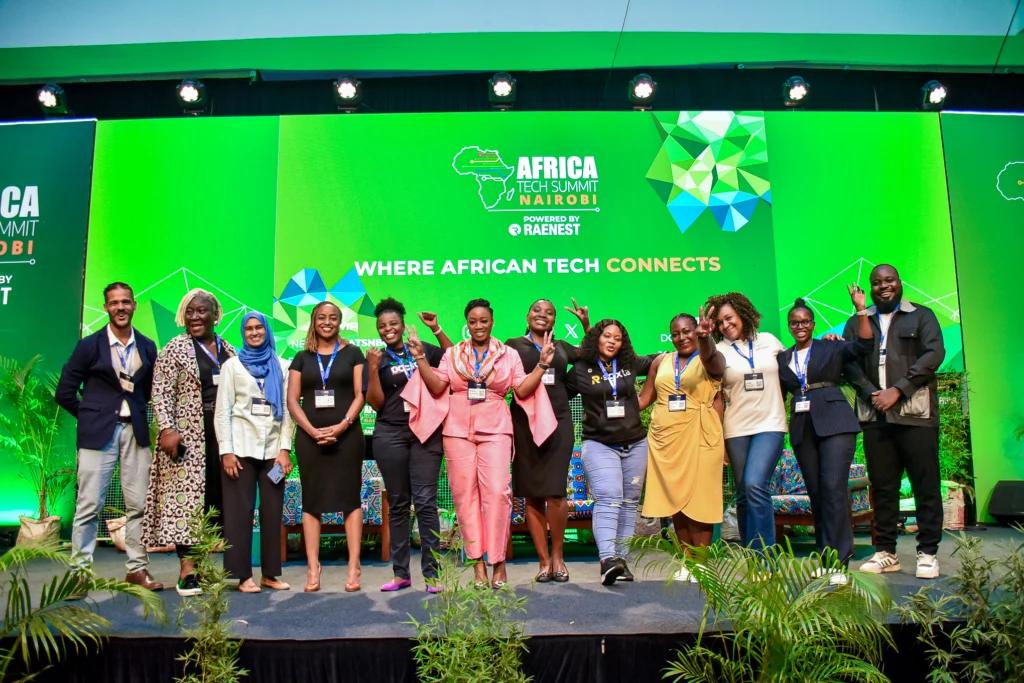
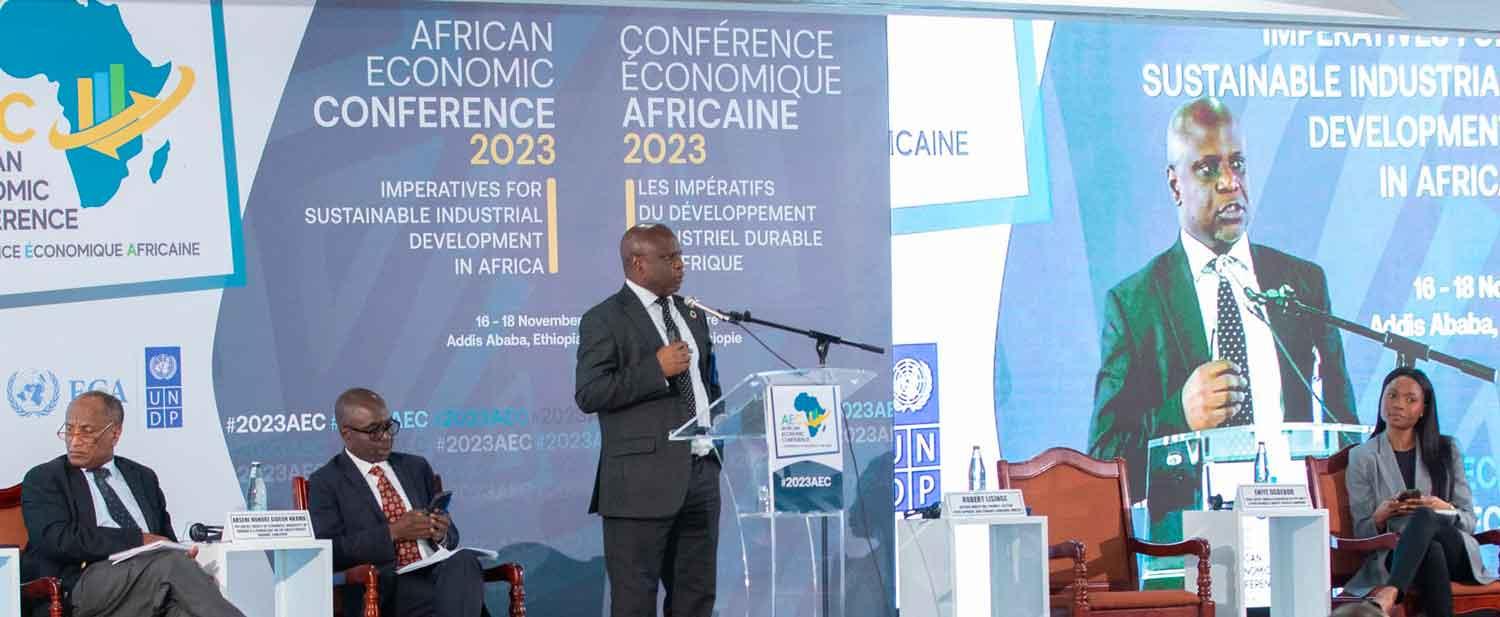
It would be wrong to paint only a dark picture. Recent years have seen a visible surge in national attention to youth. Somalia has convened successive National Conferences on Youth Empowerment. The Federal Government and UNOCT held a youth-focused National Policy Dialogue on preventing and countering violent extremism, bringing young leaders from across the country together with TUBSAN and international partners. UN-supported forums have gathered hundreds of young men and women to discuss political participation, with ministers openly encouraging youth to run for office. The Ministry of Environment and Climate Change hosted a national Youth Climate Conference, and the Local Conferences of Youth (LCOY Somalia), endorsed under the UNFCCC youth constituency, have entered their second edition. Youth peace dialogue forums have connected young people from Mogadishu, Baidoa, Kismayo, Beledweyne, and Jowhar around a shared agenda of peace and development.
These platforms matter, because they show that youth voices are finally entering the national conversation. The task now is to move beyond consultation, so that young people are not only invited to speak but supported to build.
Best Practices: What Actually Works
Drawing on Somali experience and international evidence, seven practices stand out as the most credible pathways forward:
- Fix the foundations of education. Harmonize curricula across regions, invest in teacher training and certification, regulate quality in the private education sector, and remove barriers keeping girls, rural, and displaced children out of school. Quality basic education is the single highest-return investment Somalia can make.
- Scale up market-driven skills training (TVET). Expand technical and vocational education directly linked to real market demand in areas such as construction, renewable energy, fisheries, agribusiness, digital services and the care economy, with employers involved in curriculum design and apprenticeships built in. Programmes such as UNICEF’s UPSHIFT, which trains youth to design entrepreneurial solutions to community problems, show how skills and purpose can be built together.
- Invest in youth entrepreneurship and job creation. Provide start-up capital, business mentorship, and access to finance for youth-led enterprises; use public procurement and infrastructure investment to generate youth employment; and support the digital economy, which allows Somali youth to earn globally while living locally.
- Prevent exploitation through opportunity, not only security. Prevention of recruitment into armed groups and criminal networks works best when it combines livelihoods, education, psychosocial support, credible religious guidance, and community engagement, which is the approach reflected in Somalia’s PCVE dialogues. Rehabilitation and reintegration pathways for former recruits must remain open.
- Offer real alternatives to tahriib. Honest community awareness about the dangers of the journey must be paired with what research shows youth actually respond to: jobs, quality education, and legal migration and scholarship pathways. Families and returnees who have survived tahriib are among the most powerful messengers.
- Bring youth into genuine decision-making. Implement youth quotas and meaningful representation in local councils, parliaments, and peace committees; support youth-led civil society; and protect young people from being reduced to campaign tools. Young people who are asked to fight in conflicts should also have a seat at the tables where peace is negotiated.
- Strengthen civic identity beyond clan. Invest in civic education, national service and volunteering schemes, sports, and cultural programmes that build shared Somali identity and inter-clan trust among young people. Over the long term, this is the strongest antidote to the manipulation of clan loyalty.
Conclusion: Claiming the Demographic Dividend
Every country with a young population faces the same choice: invest in that generation and reap a demographic dividend, or neglect it and pay the price later. Somalia stands at exactly that fork in the road. The challenges described here are serious, from weak education and unemployment to exploitation, tahriib, political manipulation and quiet despair. None of them, however, is new or beyond solution. What has been missing is not knowledge but sustained political will, coordinated investment and, above all, trust in young Somalis themselves.
At the Kenadid Institute for Policy & Development, we believe Somalia’s next chapter will be written by its youth. The only question is whether it will be written at home, in dignity, or on dangerous roads far away. Making sure it is the former is a responsibility shared by government, communities, the private sector, the diaspora, and institutions like ours.
References
UNDP (2012). Somalia Human Development Report 2012: Empowering Youth for Peace and Development. United Nations Development Programme.
UNDP Somalia (2025). Elections, Reconciliation and Inclusive Dialogue (ERID) Factsheet. United Nations Development Programme.
World Bank / ILO (2025). Unemployment, Youth Total (% of Total Labour Force Ages 15–24), Modelled ILO Estimate – Somalia. World Development Indicators.
Ali, N. (2016). Going on Tahriib: The Causes and Consequences of Somali Youth Migration to Europe. Rift Valley Institute / UNICEF Somalia.
Heritage Institute for Policy Studies (2024). Youth Migration in Somalia: Causes, Consequences and Possible Remedies. Mogadishu.
Botha, A. & Abdile, M. (2014). Radicalisation and al-Shabaab Recruitment in Somalia. Institute for Security Studies, Paper 266.
Human Rights Watch (2018). Somalia: Al-Shabaab Forcibly Recruiting Children.
World Bank (2013). The Pirates of Somalia: Ending the Threat, Rebuilding a Nation. Washington, DC.
UNOCT / UNCCT (2024). Somalia and UNOCT Convene a Youth-Focused National Policy Dialogue on Preventing and Countering Violent Extremism. Press Release, 13 August 2024.
United Nations in Somalia (2023). Somali Youth Converge to Discuss Role in Political Participation. UN Somalia.
Federal Ministry of Environment and Climate Change, Somalia (2025). Somalia’s Environment Minister Opens Youth Climate Change Conference in Mogadishu.
UNESCO / Federal Ministry of Youth and Sports (2022). Somali Youth Peace Dialogue Forum, International Youth Day, Mogadishu.
Mixed Migration Centre (2016). Somalia Country Statement: Migrant Smuggling and Tahriib in the Horn of Africa.
By the Kenadid Institute for Policy & Development (KIPD) | July 2026
Download the full article from below-Somalia’s Youth at a Crossroads: The Challenges Facing Young Somalis and What Actually Works to Solve Them